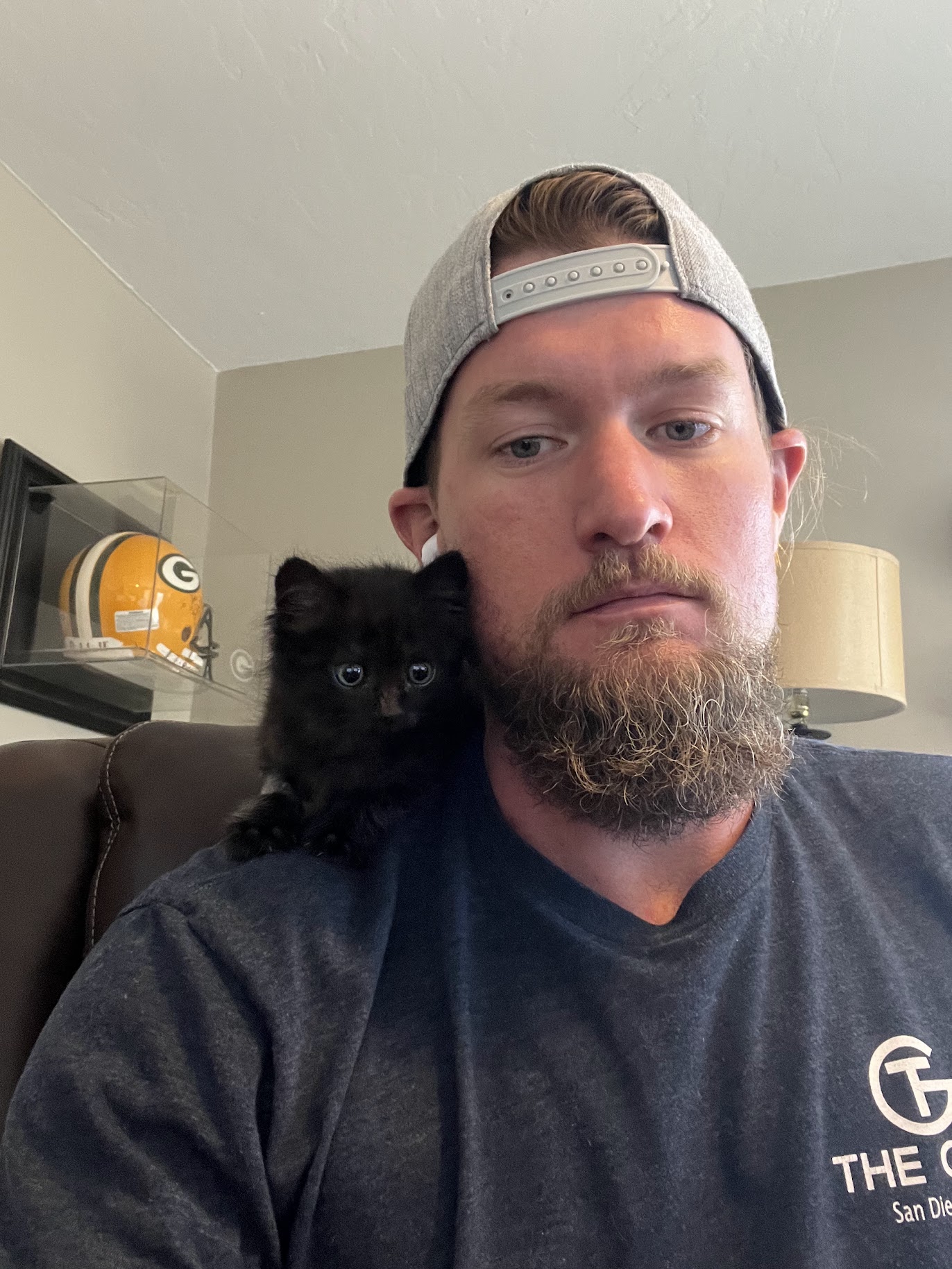
There was a time when life felt narrow, dim, and pre-written.
Fresh out of college, I landed what was supposed to be the first rung on the ladder—an entry-level job, a foot in the door, a start. On paper, it looked fine. In reality, it felt like being dropped into a maze with no exits. Every job I wanted required experience. Every opportunity demanded proof I couldn't yet provide. To get the experience, I needed the job. To get the job, I needed the experience.
A perfect catch-22.
I wasn't failing, exactly. I was surviving. But survival isn't the same as living. My outlook was bleak, and I couldn't see a path forward. Success felt abstract—something reserved for other people who had secret knowledge, better timing, or some invisible advantage I'd missed.
The moment that best captures that version of me happened every single week.
Sunday.
Sunday meant dread. It meant the slow realization that the next five days belonged to someone else. I'd feel it settle in my chest like a weight—heavy, suffocating. I felt like a drone. Like a prisoner. Counting hours instead of possibilities. Preparing myself to walk back into the office, into the same loop, again and again.
Then one Sunday, a thought landed that I couldn't shake.
The question terrified me. I imagined a future where nothing changed—just decades of quiet resentment, cheap distractions, and numbing routines. I even fantasized about disappearing entirely. Moving to the middle of nowhere. Living off the land. At least then, I wouldn't be a prisoner to the office.
But I didn't have the courage to fully step outside society. I couldn't just vanish. So I stayed—angry, trapped, and deeply restless.
Emotionally, something shifted. I realized I was already at the bottom. I had nothing to lose.
What's the worst that could happen? I asked myself. I'd scrape by. Take whatever job I could find. Maybe rely on government subsidies. Keep my head just above water. But I was already doing that. So maybe—just maybe—I could try something different.
My first attempt was the obvious one: programming. I enrolled in a course to learn C#. I told myself I needed a "real" skill. A serious developer skill. Something impressive.
It was a disaster.
No matter how hard I tried, it wouldn't click. The concepts wouldn't settle in my mind. I spent my precious few hours outside work—my only freedom—banging my head against something that wasn't working. Every failed attempt made the hole feel deeper. I wasn't just stuck at work anymore; I was wasting the little joy I had left.
That was almost the end.
I remember thinking: This is it. I'll stay entry-level forever. I'll scrape by. Maybe I'll drink too much. Live hand-to-mouth. Not everyone gets to succeed. Maybe I'm just not one of them.
What stopped me wasn't discipline or grit.
It was hope.
I knew something about myself that grades and job titles had never captured: I was smart. Learning had never been hard for me—I just hadn't found the right place to apply myself. I hadn't found my thing yet. And even at 25, I hoped it still existed.
My biggest fear was simple and absolute: failure.
Then everything changed—not all at once, but quietly.
I found HTML.
And then CSS.
They made sense.
They were learnable. Approachable. Logical. I discovered job listings for front-end roles that required just HTML and CSS. Nothing heroic. Nothing elite.
I had a realization that would define the next decade of my life:
So I decided to try.
I updated my resume and wrote that I'd been working with HTML and CSS for years. I hadn't—but I would. I applied anyway. I told myself: Fake it till you make it.
When interview requests started coming in, fear rushed back in—but this time, it was paired with momentum. I told myself that jobs ramp slowly. That I'd have time. That I could learn fast enough to survive.
So I studied differently.
I didn't focus on writing perfect code. I focused on understanding concepts. I read articles. Learned terminology. Followed trends. When interviews came, I spoke confidently—not because I was lying, but because I understood the language of the work.
And then it happened.
They offered me the job.
Remote. $40,000 a year. More than I was making before.
But the money wasn't the real prize.
The freedom was.
That job changed everything. I learned on the fly. I Googled relentlessly. I used Stack Overflow. I hired freelancers when needed. I never wrote code from scratch—I solved problems. Six months in, they were happy with my work.
I had delivered.
So I did it again.
I added React to my resume. Applied for the next level. Learned just enough. Spoke with confidence. Got interviews. Got offers.
This became my system:
- Target a learnable skill
- Update the resume
- Learn the basics and the concepts
- Apply
- Interview with confidence
- Get the job
- Deliver results by any means necessary
- Repeat
Ten years later, my life is unrecognizable.
- I work fully remote
- I own a home
- I have a child
- My wife doesn't need to work
- I support my family on under 40 hours a week
I cook. I work out. I play with my dogs. I spend time with my wife and son. I build passion projects. I still apply for new jobs—because I can.
In my best year, I made $400,000. I started at $40,000.
But more important than any number is this:
I wake up every day with freedom.
From a career perspective, I believe I can do anything. I don't know where I'll be in another ten years—but I know I'll be happy. My family will be safe. We will live comfortably. And I will never be a prisoner to an office again.
Here's the truth most people won't say out loud:
The workforce is full of people inflating themselves. Everyone is taking a risk when they hire. The difference isn't honesty—it's results. I'm not a BS artist because I deliver. How I got there doesn't matter. Outcomes do.
And now, I share this story because I have a son. I fear the world he's growing up in—where houses feel unattainable, wages lag behind reality, and invisible rules tell you to stay in your lane.
Those walls aren't real.
Ignore them.
If I can do this—just some guy, not a prodigy—so can you.
Ready to build your own escape?
The Remote Roadmap is the system I wish I had when I started. Get it now.
Get The Remote Roadmap